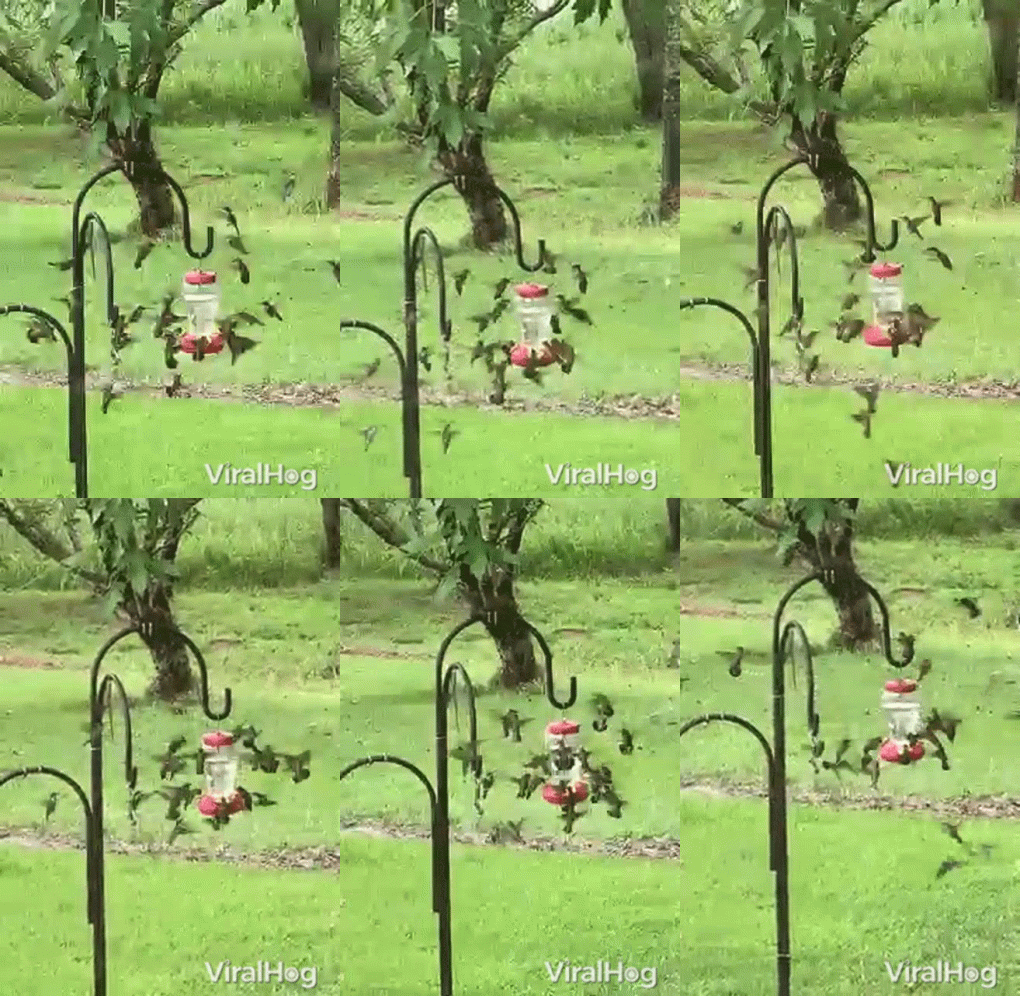
There’s a strange thing that happens when you start showing up for others—when you start offering help, truth, support, wisdom, resources, or even just kindness in a consistent way. At first, it feels like service. Then, over time, it starts to feel like demand.
Because when you give out bread… people get hungry.
Not just physically hungry—but emotionally, mentally, and even spiritually dependent on what you provide.
What begins as generosity can slowly turn into expectation. People who once appreciated your help start to assume it. People who once received it with gratitude start to treat it like it’s owed. And sometimes, the more you give, the less it feels like enough.
That’s the tension of being someone who pours out.
At first, you think, “Let me help where I can.”
But later, you realize not everyone is coming to be fed—they’re coming because they’ve learned you always have bread.
And the problem isn’t that you’re giving. The problem is when your giving becomes the only source people rely on while they refuse to learn how to sustain themselves.
Because real help should lead to growth, not dependency.
There’s a difference between feeding someone and forming a cycle where they never learn how to feed themselves.
And if you’re not careful, your generosity can turn into exhaustion. You start feeling drained, unappreciated, even resentful—not because you don’t care, but because what you freely gave is now expected without limits.
Proverbs 11:25 says, “A generous person will prosper; whoever refreshes others will be refreshed.” But that refreshment only flows when giving is balanced with wisdom, boundaries, and discernment.
Not everyone is hungry for growth. Some are just hungry for access.
And access without responsibility creates imbalance.
This is where boundaries become necessary. Not to stop giving—but to stop over-giving to the point of depletion. Because you can’t pour endlessly into others while neglecting your own nourishment.
Even Jesus, who fed the multitudes, withdrew at times. He stepped away from the crowds. He didn’t allow constant demand to override divine direction.
That matters.
Because if you become everything for everyone, you eventually have nothing left for yourself—or for the purpose you’re actually called to fulfill.
So when you notice people getting “hungry” every time you show up, ask yourself:
- Am I being led by purpose or pressure?
- Am I empowering people, or unintentionally enabling dependency?
- Where do I need to step back so others can grow up?
Giving is beautiful. But giving without boundaries leads to burnout.
And sometimes love looks like stepping back so people can learn how to find their own bread.
Because the goal was never to become the only source—it was to be a seed of growth, not a permanent substitute for it.

Leave a comment