• 🌦️ Adjusting to Weather Swings

    Layer Up: Wear lightweight layers so you can adjust quickly if it warms up or cools down. A light jacket, scarf, and umbrella are essentials. Protect Against Allergies: Early blooms in March can trigger seasonal allergies. Keep windows closed on high pollen days and start antihistamines if needed. Stay Dry: March often brings rain—wet clothes and shoes can lower body temperature and make you more prone to colds.

    🍎 Nutrition & Immune Support

    Eat Seasonal Produce: Spinach, kale, carrots, citrus, and strawberries start coming into season. These boost vitamins C and A for immunity. Stay Hydrated: Cold weather can trick you into drinking less water. Keep a bottle nearby, even if you don’t feel thirsty. Warm Comfort Foods, Balanced: Soups and stews are great, but balance with lighter meals as warmer days appear.

    🏃 Movement & Activity

    Flexible Exercise Routine: Some days may be perfect for an outdoor walk, while others call for at-home yoga or bodyweight workouts. Soak Up Sunshine: On brighter days, get outside—even 10 minutes of sun can lift your mood and help vitamin D levels.

    🧠 Mental & Emotional Wellbeing

    Beat Seasonal Blues: March can still feel gloomy. Keep lights bright indoors, use a sunrise alarm clock, or try light therapy if winter blues linger. Plan Fun Activities: The uncertainty of weather can make plans harder. Have both indoor and outdoor options in mind so you can pivot easily.

    😴 Sleep & Routine

    Prepare for Daylight Savings: In March, clocks often “spring forward.” Start shifting your bedtime 15 minutes earlier a few days before to adjust smoothly. Keep Consistency: Don’t let unpredictable weather disrupt your morning or evening routines—your body thrives on rhythm.

  • 1. Organize Your Digital Files

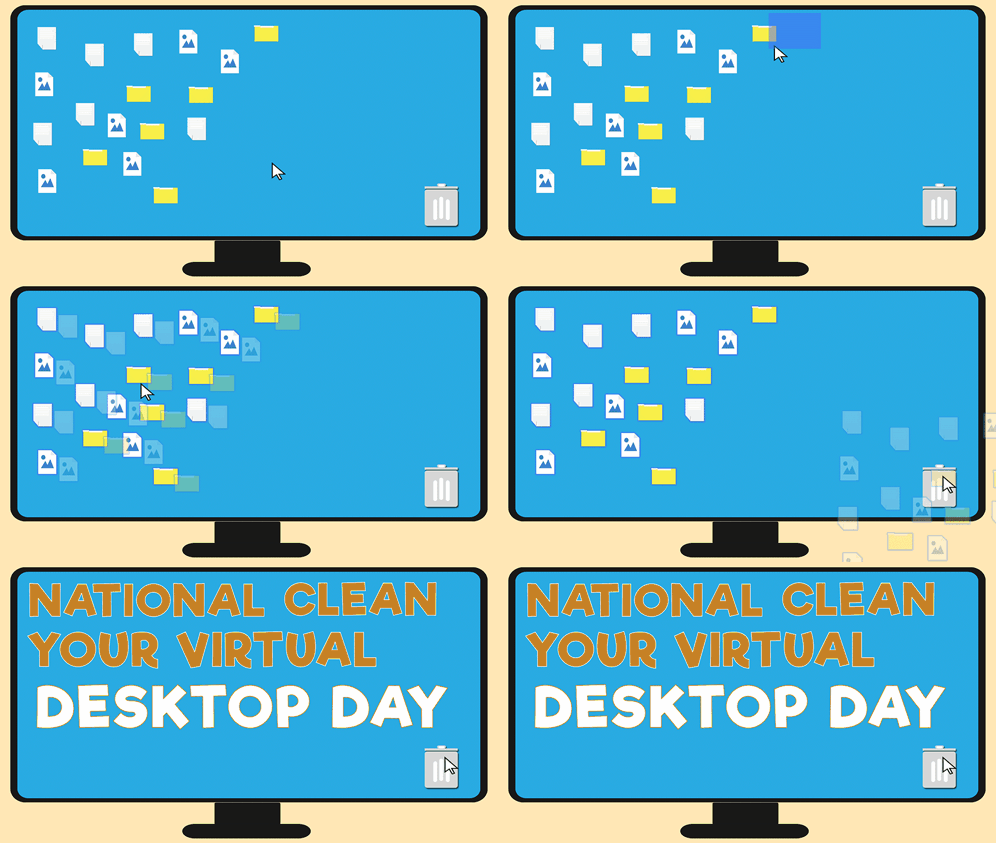
    • Create Folders: Organize files into well-structured folders for easy access.
    • Use Descriptive Names: Name files clearly to make searching easier.

    2. Streamline Your Email

    • Unsubscribe: Regularly unsubscribe from newsletters and promotional emails you no longer read.
    • Use Folders and Labels: Organize emails into folders or use labels to keep your inbox tidy.

    3. Limit Social Media Use

    • Choose Platforms Wisely: Focus on one or two platforms that matter most to you.
    • Set Time Limits: Use screen time management tools to limit your social media usage.

    4. Manage Passwords Effectively

    • Use a Password Manager: This can help you create and store complex passwords securely.
    • Enable Two-Factor Authentication: Add an extra layer of security to your accounts.

    5. Prioritize Digital Minimalism

    • Delete Unused Apps: Remove apps that you don’t use regularly to declutter your devices.
    • Limit Notifications: Turn off non-essential notifications to reduce distractions.

    6. Utilize Productivity Tools

    • Task Management Apps: Use tools like Todoist or Trello to manage tasks and projects efficiently.
    • Calendar Apps: Keep your schedule organized with digital calendars that sync across devices.

    7. Backup Important Data

    • Cloud Storage: Use services like Google Drive or Dropbox to back up important files.
    • Regular Backups: Set a schedule for regular backups to avoid data loss.

    8. Practice Mindful Browsing

    • Limit Open Tabs: Keep only essential tabs open to reduce overwhelm.
    • Use Reader Mode: For articles, use reader modes in browsers to minimize distractions.

    9. Review and Adjust Regularly

    • Monthly Check-ins: Take time each month to review your digital habits and make adjustments as needed.
    • Set Goals: Establish clear goals for your online presence to stay focused.

    By implementing these strategies, you can create a more organized and efficient digital life, making your online presence simpler and less overwhelming.


  • Myths:

    1. Increased Productivity: Many believe multitasking boosts productivity. In reality, focusing on one task at a time often leads to better efficiency and output.
    2. Brain Optimization: It’s a common myth that the brain can handle multiple tasks simultaneously. Studies show that what we perceive as multitasking is actually rapid task-switching, which can hinder performance.
    3. Time-Saver: People think multitasking saves time. However, switching between tasks can lead to time loss due to the cognitive load required to refocus.
    4. Universal Skill: It’s assumed everyone can multitask effectively. However, individual capabilities vary greatly, and some people find it more challenging than others.

    Realities:

    1. Cognitive Overload: Multitasking can lead to mental fatigue and decreased overall performance. The brain can only handle a limited amount of information at once.
    2. Quality of Work: When multitasking, the quality of work can suffer. Mistakes are more likely to occur, and creativity can be stifled.
    3. Stress and Burnout: Juggling multiple tasks can increase stress levels and contribute to burnout, as constant task-switching creates pressure.
    4. Learning Impact: For complex tasks, multitasking can hinder learning and retention, as our brains need focused attention to absorb information effectively.

    In summary, while multitasking may seem like an efficient way to get things done, it often leads to diminished returns in productivity and quality. Focusing on one task at a time is generally more effective for achieving better results.

  • 🧘 Achieving the Flow State: The Zen of Productivity for Peak Performance

    1. What Is Flow State?

    A mental zone where you’re fully immersed in what you’re doing. Time feels like it disappears. Focus, energy, and creativity skyrocket. Often called being “in the zone.”

    2. Why Flow Matters

    Boosts productivity without burnout. Enhances creativity + problem-solving. Creates satisfaction and joy in your work.

    3. Steps to Enter Flow

    A. Clear the Clutter

    Physically: tidy your space. Mentally: write down lingering thoughts to get them off your mind.

    B. Choose the Right Task

    Flow happens when the challenge = your skill level. Too easy → boredom. Too hard → anxiety.

    C. Eliminate Distractions

    Silence notifications, close tabs, set boundaries. Use “focus tools” like Forest, Pomodoro timers, or noise-canceling playlists.

    D. Set a Clear Goal

    Define: What does success look like in this session? Example: “Write 500 words” vs. “Work on my book.”

    E. Time Block Your Golden Hours

    Schedule deep work when your energy is highest (usually morning for most people). Commit at least 60–90 minutes.

    F. Engage Fully

    Single-task. No multitasking. Immerse yourself completely in the process.

    4. Zen Habits That Support Flow

    Mindfulness meditation (trains focus muscle). Breathwork to calm your nervous system. Movement (walk, stretch) before you dive into work. Protecting energy with rest, hydration, and healthy fuel.

    5. Signs You’re in Flow

    ✅ You lose track of time

    ✅ You forget about yourself (ego quiets down)

    ✅ The task feels effortless—even if it’s challenging

    ✅ You feel energized instead of drained after finishing

    ✨ Pep Talk

    “Flow isn’t about working harder—it’s about working deeper. It’s the sweet spot where your mind, body, and task align perfectly. When you create the right conditions—clear goals, deep focus, and full presence—you unlock the zen of productivity. In flow, you don’t just perform—you thrive.”

  • 🌿 From Stress to Serenity: Stress-Reducing Strategies

    1. Recognize the Stress Signals

    Racing thoughts Tight shoulders, headaches, or fatigue Irritability or trouble sleeping 👉 Awareness is the first step to reducing stress—if you can name it, you can tame it.

    2. Breathe Your Way to Calm

    Try the 4-7-8 method → Inhale for 4, hold for 7, exhale for 8. Deep breathing signals your nervous system to relax instantly.

    3. Move Your Body

    Even 10 minutes of walking, stretching, or dancing reduces cortisol (the stress hormone). Yoga and tai chi combine movement + breath for extra calm.

    4. Declutter Your Mind (and Space)

    Journaling helps dump out mental clutter. A clean desk or organized room creates a calmer environment.

    5. Digital Detox Moments

    Stress skyrockets when we’re always “on.” Try phone-free mornings or set app timers for social media. Replace scrolling with reading, meditating, or connecting with loved ones.

    6. Practice the Power of No

    Overcommitment fuels stress. Protect your energy—say “no” to what drains you and “yes” to what restores you.

    7. Lean on Your Serenity Boosters

    Music that soothes you 🎶 Spending time in nature 🌳 Aromatherapy (lavender, eucalyptus) 🌸 Prayer, meditation, or mindfulness 🧘🏽‍♀️

    8. Reframe the Stress

    Instead of “I’m overwhelmed,” try → “I’m being stretched, and I can handle this step by step.” A mindset shift can turn stress into growth.

    ✨ Pep Talk

    “Stress is inevitable, but staying stressed isn’t. Serenity is built through daily choices—breathing deeper, moving more, saying no, and choosing peace over pressure. The calmer you become inside, the more powerful you are outside.”

  • Recently my husband and I celebrated 20 years. It’s amazing to have someone in your life for this long no matter the ups and downs.

    20 Years of Marriage: Love, Prayer, and the Power of Patience

    Twenty years of marriage is more than just a number. It’s a journey—one filled with love, laughter, tears, growth, and countless lessons along the way.

    When people look at a couple celebrating 20 years together, they often see the smiles, the photos, the anniversary posts, and the happy moments. But what they may not see are the storms that had to be weathered to get there.

    Marriage is not perfect. It was never meant to be.

    Over the years, there have been ups and downs. Moments of deep connection and moments where communication felt difficult. Times when life’s pressures—finances, responsibilities, parenting, and personal struggles—tested the strength of the relationship.

    But what kept the foundation standing was not perfection.

    It was commitment.

    It was prayer.

    And it was patience.

    There were moments when the only thing holding everything together was faith. Moments when prayer became the bridge between hurt and healing. In those times, prayer wasn’t just words—it was surrender. It was asking God to soften hearts, restore understanding, and remind us why we chose each other in the first place.

    Marriage teaches you that love is not just a feeling—it’s a decision you make over and over again.

    You choose love when things are easy.

    But more importantly, you choose love when things are hard.

    Patience also becomes one of the greatest teachers in a long marriage. You learn that people grow, change, and evolve over time. The person you married 20 years ago is not the exact same person today—and neither are you. Marriage requires the grace to grow together instead of apart.

    Sometimes that growth comes through joy.

    Sometimes it comes through struggle.

    But every challenge becomes an opportunity to build something stronger.

    Twenty years later, the greatest gift isn’t perfection—it’s perseverance.

    It’s looking back and realizing that every obstacle helped build a deeper understanding, a stronger bond, and a love rooted in faith.

    Because when prayer leads the way and patience fills the gaps, marriage becomes more than just a relationship—it becomes a partnership guided by purpose.

    Twenty years is proof that love can endure.

    That faith can restore.

    And that two imperfect people can build something beautiful when they refuse to give up on each other.

    Here’s to 20 years of lessons, laughter, healing, and growth—and to many more years ahead.

    Because the best part of the journey is still being written.

  • 📅 When Is It?

    March 1 – March 31 every year. Started in the U.S., but it’s also recognized in other countries.

    📖 What Is It About?

    Women’s History Month is a time to honor, reflect, and celebrate the contributions of women—past and present—who have shaped history, culture, science, politics, art, and everyday life.

    It grew out of International Women’s Day (March 8th) and a 1980s push to dedicate more time to women’s contributions in history.

    🎉 How Do We Celebrate?

    Learn & Share Stories → read about women trailblazers, activists, inventors, and leaders. Support Women-Owned Businesses → shop, promote, and uplift women entrepreneurs. Host or Join Events → panels, workshops, museum exhibits, or community programs. Educate & Inspire → schools highlight women leaders; families can share stories of strong women in their own lineage. Reflect Personally → celebrate the women in your life—mothers, grandmothers, sisters, mentors, friends.

    👩‍🏫 Who Do We Celebrate?

    Women from all walks of life, including:

    Historic figures → Harriet Tubman, Susan B. Anthony, Sojourner Truth, Marie Curie. Modern trailblazers → Michelle Obama, Serena Williams, Malala Yousafzai, Oprah Winfrey. Everyday women → teachers, nurses, mothers, community leaders, and unsung heroes.

    ✨ The heart of Women’s History Month is this: recognizing women’s voices, sacrifices, and achievements that history books often overlooked—and passing those stories forward.

  • 🔑 Unleashing the 80/20 Rule: Focus on What Truly Matters

    1. What Is the 80/20 Rule?

    Also called the Pareto Principle, it says:

    👉 80% of your results come from just 20% of your efforts.

    This means a small portion of what you do creates the biggest impact—while most of the “busy work” barely moves the needle.

    2. Why It Matters

    Instead of doing more, you learn to do better. It helps you identify your “high-value” activities—the things that bring growth, peace, money, or progress. It cuts out the noise, so you can put energy where it counts.

    3. How to Apply It

    Step 1: Identify the Vital Few

    What 20% of tasks give you the most progress at work? Which 20% of relationships give you the most joy? What 20% of habits give you the most energy or health benefits?

    Step 2: Eliminate or Delegate the Rest

    Busywork, low-impact meetings, endless scrolling, cluttered routines → minimize or delegate them.

    Step 3: Double Down on the Essentials

    Once you know what matters most, schedule it during your best energy hours. Protect that time like it’s sacred.

    4. Examples in Real Life

    At work → 20% of clients bring in 80% of revenue. In learning → 20% of concepts explain 80% of the subject. In personal growth → 20% of habits (like sleep, exercise, journaling) create 80% of your well-being.

    5. Pep Talk

    “Stop chasing everything and start chasing the right things. When you unleash the 80/20 rule, you give yourself permission to focus on what truly matters—and suddenly, life feels lighter, work feels smarter, and your results skyrocket.”

  • 📱 Free Productivity Apps You Need

    1. Trello (Task & Project Management)

    Visual “boards” and “cards” to organize projects. Great for personal goals or team collaboration.

    2. Notion (All-in-One Workspace)

    Notes, to-do lists, databases, and calendars in one place. Customizable for journaling, planning, or business.

    3. Todoist (Task Management)

    Simple, clean, and powerful to-do list app. Smart scheduling + recurring task reminders.

    4. Google Keep (Quick Notes & Reminders)

    Sticky notes for your phone. Add voice memos, pictures, or checklists—syncs across all devices.

    5. Forest (Focus App) 🌱

    Gamifies focus: plant a tree while you work, and it grows if you don’t touch your phone. Perfect for beating procrastination.

    6. Microsoft To Do (Daily Planner)

    Super intuitive daily task organizer. Great for syncing between phone and computer.

    7. Google Calendar (Smart Scheduling)

    Essential for time-blocking and reminders. Share calendars with family, friends, or teams.

    8. Evernote (Note-Taking)

    Capture ideas, meeting notes, or web clippings. Great for storing long-form info.

    9. Pomofocus.io (Web-based Focus Timer)

    Free online Pomodoro timer (25-min focus, 5-min break). Helps boost focus and avoid burnout.

    10. Slack (Free Plan) (Communication & Collaboration)

    Keeps work chat and collaboration organized. Integrates with Google Drive, Trello, etc.

    ✨ Bonus: If you want mental clarity + productivity combined, try Headspace (free version) for guided meditation or Habitica (turns your tasks into a game).

  • Celebrating the Strength, Faith, and Power of Women

    Every year on International Women’s Day, we take time to celebrate the strength, resilience, and beauty of women across the world. Women are leaders, nurturers, builders of families, and changemakers in communities. Today is a reminder not only of how far women have come, but also of the power we carry to uplift one another.

    Women show strength in countless ways. Some lead businesses and organizations, some raise families with unconditional love, some mentor the next generation, and others quietly hold their communities together through service and faith. No matter the role, every woman carries a story of courage.

    For many of us, our power also comes from faith, prayer, and perseverance. When women come together in unity—supporting, encouraging, and praying for one another—there is a powerful shift that happens. Communities grow stronger, families heal, and hope is restored.

    International Women’s Day is also a moment to remind women that their voices matter. Your dreams matter. Your purpose matters. The gifts and talents placed inside of you were meant to impact the world around you.

    As women, we are not meant to walk this journey alone. When we lift each other up instead of competing with one another, we create spaces where every woman can rise.

    Today, let’s celebrate the women who inspire us—the mothers, daughters, sisters, mentors, and friends who make life richer. Let’s also commit to supporting, empowering, and praying for one another, because when women stand together, incredible things happen.

    Here’s to the strength of women.

    Here’s to the power of unity.

    And here’s to the incredible future that women everywhere are building—together.

    Happy International Women’s Day.