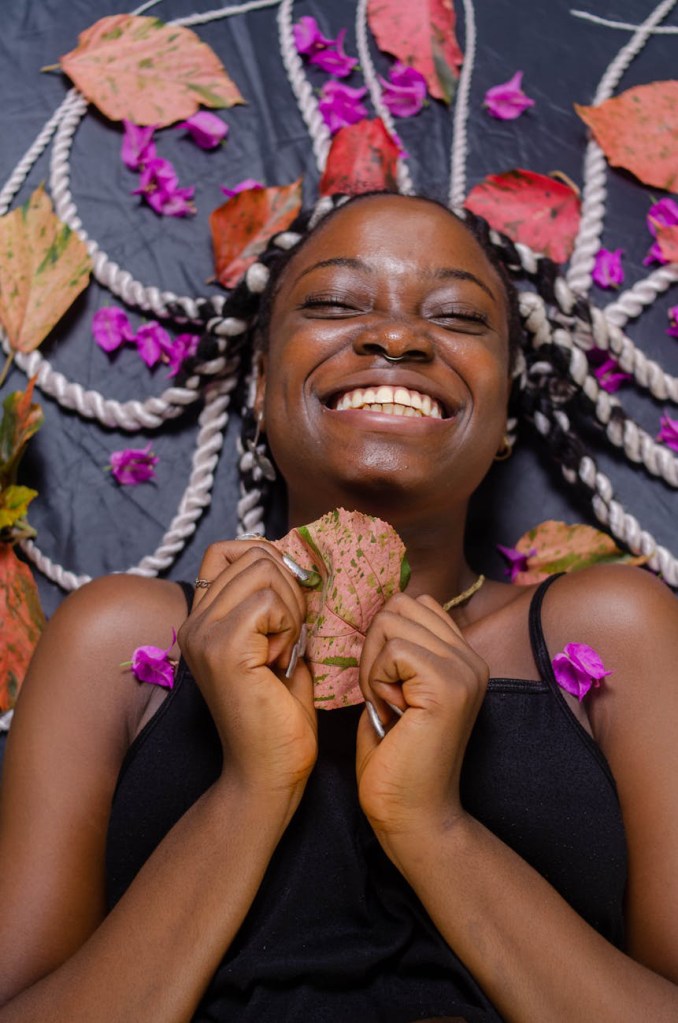
Black joy is not accidental. It is not simple. And it is not something that exists in spite of history—it exists because of survival, resilience, and an unbreakable spirit that has carried generations forward.
To experience Black joy is to understand that celebration itself can be an act of resistance. In a world that has often tried to define, limit, or diminish Black existence, choosing joy becomes powerful. It becomes intentional. It becomes revolutionary.
Joy as a Form of Power
Black joy is not just laughter or happiness—it is presence. It is the ability to still find light, creativity, love, and expression in the midst of everything that has tried to silence it.
It shows up in music, in movement, in family gatherings, in art, in storytelling, in style, in language, in food, and in the everyday ways people choose to live fully despite systems that have often tried to make life smaller.
Joy becomes a declaration:
We are still here. We are still thriving. We are still whole.
Strength That Has Always Been There
Black joy is deeply connected to strength—not the kind that only shows up in struggle, but the kind that continues beyond it.
It is strength that has been passed down through generations. Strength that learned how to endure and still create. Strength that knows how to carry pain without becoming defined by it.
But more importantly, it is strength that also knows how to celebrate.
Because survival is one part of the story—but joy is another.
Culture as Living Legacy
Black joy is rooted in culture that continues to evolve while honoring where it comes from.
It lives in traditions, in community, in expression, and in the everyday brilliance of people who turn lived experience into art, innovation, and connection.
Culture is not something frozen in time—it is alive. It grows, shifts, and continues to shape the world in ways that are often imitated but never fully replicated.
To celebrate Black joy is to honor that legacy in motion.
Joy as Resistance
Resistance is often imagined as loud or confrontational, but sometimes resistance is simply refusing to be reduced.
It is choosing to celebrate when the world expects silence.
It is choosing to laugh when heaviness is expected.
It is choosing to create beauty in spaces that tried to deny it.
It is choosing to exist fully, without apology.
In that way, Black joy becomes resistance—not because joy is political, but because existing fully and freely has often been an act of defiance in itself.
The Importance of Being Fully Seen
For too long, Black experiences have been portrayed through limited narratives. But Black joy expands that narrative. It reminds the world that identity is not only shaped by struggle, but also by brilliance, creativity, love, and celebration.
It is important to be seen in fullness—not only in hardship, but in wholeness.
Joy allows that fullness to exist.
Community Is Where Joy Grows
Black joy is not only individual—it is communal. It is shared, amplified, and passed between people.
It grows in connection:
in shared laughter in gatherings that feel like home in support systems built through understanding in traditions that carry meaning forward
Community is where joy becomes something larger than the individual—it becomes legacy.
Legacy That Cannot Be Erased
Black joy is tied to legacy because it continues to move forward even in the face of attempts to erase it.
Every expression of creativity, every act of love, every celebration of identity becomes part of a larger story that cannot be erased or diminished.
Legacy is not just what is left behind—it is what continues to live.
And Black joy ensures that what lives is vibrant, powerful, and real.
Choosing Joy on Purpose
Black joy is not passive. It is chosen. Protected. Nurtured. And shared intentionally.
It is a reminder that even in a world that has not always been fair, there is still space to celebrate, to create, to love, and to exist fully.
And that choice matters.
Final Reflection
Black joy is resistance because it refuses limitation. It refuses invisibility. It refuses to be defined by anything less than wholeness.
It is strength. It is culture. It is legacy. It is life.
And most of all, it is a reminder that joy is not the opposite of struggle—it is what continues in spite of it, through it, and beyond it.

Leave a comment