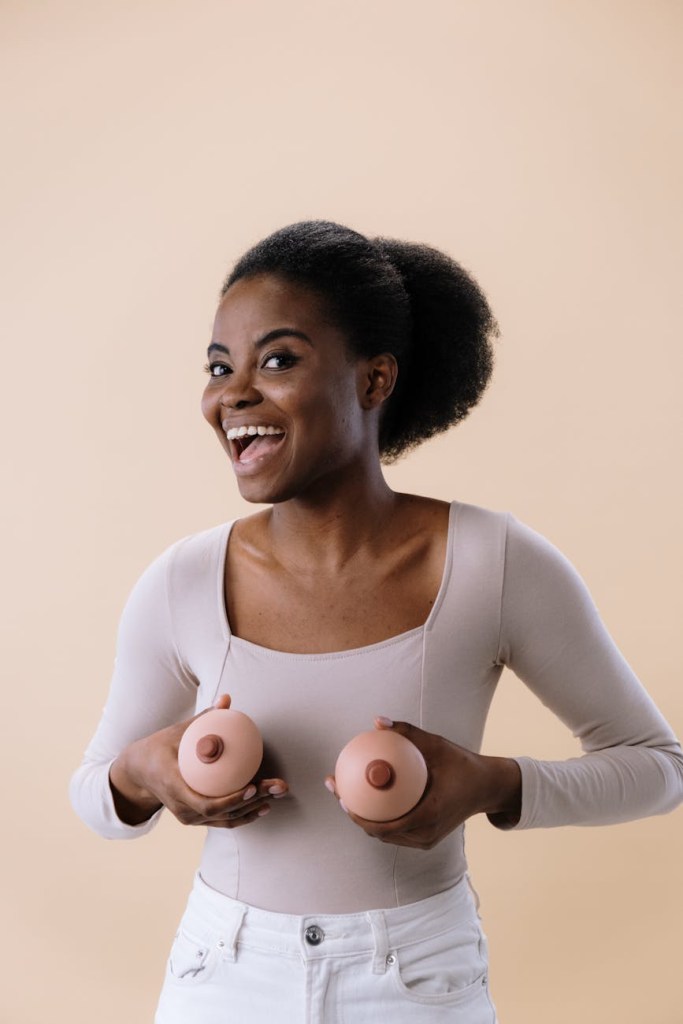
When to Perform the Exam
- It’s best to perform the exam at the same time each month, about a week after your menstrual period ends when your breasts are least likely to be swollen or tender. If you no longer have periods, choose a specific day each month.
Steps for the Breast Self-Exam
- Visual Inspection:
- Stand in front of a mirror with your arms at your sides.
- Look for any changes in size, shape, or symmetry of your breasts.
- Check for any visible lumps, swelling, or skin changes (like dimpling, redness, or rashes).
- Raise your arms above your head to see if there are any changes in the shape or contour of your breasts.
- Palpation (Feeling for Lumps):
- Lying Down:
- Lie down on your back and place a pillow under your right shoulder.
- Use your right hand to examine your left breast.
- Use the pads of your fingers (not the tips) to feel for lumps.
- Press down with varying levels of pressure (light, medium, and firm) to feel all the tissues.
- Start at the outer edge of the breast and move in a circular pattern towards the nipple. Cover the entire breast area, including the armpit.
- Repeat on the other side using your left hand to examine your right breast.
- Standing Up:
- You can also do the palpation while standing, which may help you feel any lumps more easily.
- You can do this in the shower, as the soap can help your fingers glide over the skin.
- Examine the Nipples:
- Gently squeeze each nipple to check for any discharge (fluid) or changes.
What to Look For
- Lumps or hard knots in the breast or underarm area.
- Changes in breast size or shape.
- Skin texture changes (such as puckering or dimpling).
- Any unusual discharge from the nipples.
If You Notice Any Changes
- If you find any lumps, changes, or abnormalities, don’t panic, but do consult a healthcare professional for further evaluation.
Additional Tips
- Stay consistent with your exams to better recognize what is normal for you.
- Consider using a breast self-exam guide or diagram for reference.
- Pair your self-exams with regular clinical breast exams and mammograms as recommended by your healthcare provider.
Regular self-exams can be an important part of monitoring your breast health. If you have any concerns or questions, don’t hesitate to reach out to a healthcare professional.

Leave a comment